
2026-01-19
1) Dr. Ni Made Utami Dwipayanti (Principle), 2) Dr. Kadek Tresna Adhi, 3) Dr. dr. Putu Ayu Asri Damayanti, 4) Dr. rer. grout. Ni Nyoman Ayu Dewi, 5) Dr. dr. I Kadek Swastika, 6) Prof Donald Stewart, 7) Prof Darren Gray, 8) Dr Catherine Gordon, 9) Dr Matthew Kelly, 10) Ronaldo Damar Setiawan, 11) Adek Intan Nur’aini, 12) Ni Kadek Aprilia P.
Facilitated through
MEMORANDUM OF UNDERSTANDING (1997) between UNIVERSITAS UDAYANA, INDONESIA And GRIFFITH UNIVERSITY, Brisbane, Australia. In partnership with QIMR Berghofer Institute Of Medical Research, Australian National University, Research School of Population Health, Canberra, Australia
Funded by: 2023-24 Australia-Indonesia Institute (AII00128)
Project Overview
Uniting Science and the Arts to Improve Indonesian Child Health
This project aims to improve children’s knowledge, attitudes, and everyday practices related to nutrition, hygiene, and sanitation through culturally appropriate health education. Implemented in rural Bali, Indonesia, the project combines scientific research with creative storytelling to address persistent challenges such as stunting, anaemia, and parasitic infections among primary school children. The intervention was developed and tested in collaboration with local schools, teachers, health workers, and international research partners from Indonesia and Australia. By using engaging children’s storybooks, participatory classroom activities, and teacher-led discussions, the project supports healthier behaviours in a way that is meaningful, enjoyable, and rooted in local culture.
Our Approach
The project uses a school-based health education intervention supported by research and community engagement. The core components include:
1. Children’s illustrated storybooks using local language and familiar characters
2. Guided storytelling, games, quizzes, and classroom discussions
3. A teacher activity guideline to ensure consistent and effective delivery
4. Ongoing monitoring of children’s health, nutrition, and hygiene practices
This integrated approach helps children understand how daily habits—such as handwashing, safe food choices, and proper sanitation—can protect their health and support healthy growth.
Children’s Storybooks
Three illustrated storybooks form the heart of the intervention. Each book focuses on a key health theme and is designed to be fun, easy to understand, and culturally relevant.
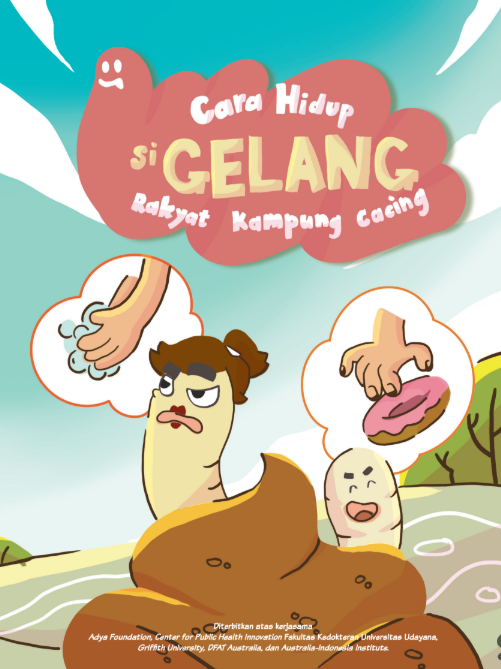
1. Cara Hidup si Gelang Rakyat Kampung Cacing: Introduces children to how parasitic worms infect human body and shows how good hygiene and sanitation can prevent infection.
2. Petualangan Membasmi Cacing: Explores everyday behaviours related to cleanliness, toilet use, and environmental sanitation.
3. Tamba Kesal Jajanan Itu: Focuses on food hygiene and nutrition, helping children understand safe snacks, clean food preparation, and prevention of food-borne diseases.
All books are available online and were also printed and used directly in participating schools.
Download All Books
Children’s Activity & Teacher Guideline
To support teachers and schools, the project developed a practical activity guideline that accompanies the storybooks. This guide helps teachers:
1. Conduct storytelling sessions
2. Facilitate discussions and reflection
3. Organise games, quizzes, and creative activities
4. Reinforce key messages on hygiene, sanitation, and nutrition
The guideline ensures that the intervention is delivered in a consistent, engaging, and age-appropriate way across different schools.
Teacher Activity Guideline: Teacher Activity Guideline
Documentation & Project Activities
The project was implemented through close collaboration with schools, parents, health centres, and local authorities. Activities included teacher training, parent information sessions, classroom storytelling, health measurements, and laboratory analysis. Project documentation videos and photos capture key moments from the field, including classroom activities, community engagement, and research implementation.
👉 Project Recap Video
Why It Matters
By combining research, education, and creative storytelling, this project demonstrates how culturally grounded approaches can support healthier behaviours among children and contribute to long-term improvements in child health and wellbeing.